Take a look at ET Online's new article about Fergie in the upcoming July Issue of Allure, all about her meal delivery program Diet Designs!
http://www.etonline.com/music/111589_Celebrity_Fit_or_Fad_Fergie/
Wednesday, June 15, 2011

Monday, June 13, 2011
Beverages: The Healthy Body & Weight Loss Killer
Ditching that regular soda and switching to a diet version may not be the perfect fix-it healthy solution. Research shows that both versions may lead to disease. Before consulting with clients and making recommendations, I like to review ongoing food and nutrition research, especially regarding liquid calories.
Clients ask me, “What could be so bad about a no-calorie diet soda?” Well, studies show that artificial sweeteners alter your metabolism and increase your sweet tooth. They make you want more sugar, which means consuming more calories in the long run. The food industry has rapidly increased the production of foods with artificial sweeteners and Americans are heavier than ever! According to the Mayo Clinic, sugar substitutes are not “magic bullets for weight loss.” They are synthetic and intensely sweet, much more than regular sugar itself. At the end of the day, keep it simple. One teaspoon of sugar is only 10 calories and is not going to harm you or make you fat.
Other research has recently linked diet soft drinks to disease. A nine year study followed older adults who drank diet soda daily. The results showed a 48% higher risk of stroke, heart attack, and death, even after adjusting for other risk factors. Arguably, this study hasn’t been published in a peer-review journal and may have other confounding factors. As a nutritionist who has observed patterns of America’s intake of artificial sweeteners, I’ve seen their long-term effects first hand. Research on these sugar substitutes connects diet soda consumption to metabolic syndrome, chronic kidney disease, and Type 2 Diabetes.
When clients hear this they ask, “Isn’t it better to have a regular carbonated soda instead?” Well, no, definitely not. According to Tufts’ Irwin H. Rosenberg, MD, “The real concern remains sugared soft drinks, which have gotten a free ride for years in their health impact.” An abundance of studies have connected regular soft drinks to various health issues, beyond the increase in obesity. Too much pop may be bad for your bone health. A 2007 Tufts study connected drinking cola to lower bone-mineral density in older women. Another study of younger women showed that calcium and phosphorus excretion, a possible indicator for low bone-mineral density, was higher in participants drinking diet cola. What’s more, new research shows a connection between sugary soft drinks and high blood pressure. Another study done by Louisiana State University in 2010 found that those who drank one fewer sugary beverage per day lowered their blood pressure over an 18 month period. On top of these concerns, sugary soft drinks have been linked with pancreatic cancer.
This data is scary. One concern is that this research doesn’t account for other lifestyle decisions, such as diet and exercise, exaggerating the relationships of soft drinks and disease. People who consume many soft drinks, diet or regular, may be making other poor choices or may already be at risk for obesity and heart disease. These beverages provide excess calories without providing essential nutrients. A 2009 study determined that cutting back on liquid calories may be more valuable than cutting back calories from solid food. Whole foods provide nutrients that your body needs, but it is important to remember the bottom line: portion control is the key to healthy eating.
What beverage guidelines do I give to my clients? The only way to avoid drinking large amounts of calories and sugar is to make your go-to drink water. Stop drinking sugary sodas and guzzling down sports drinks, juices, and fruit drinks. These brightly colored beverages contain corn syrup, artificial dyes, and flavorings that your body doesn’t need. You should drink approximately 2 liters of water a day. Most of your body-approximately 65% - is composed of water. Your brain is actually three-quarters water! Water is the most important power nutrient; without enough water, nutrients like carbs, proteins, and fats can’t get into your body’s cells. Water keeps you hydrated and helps your body work optimally.
Other great tips that may help suppress that soda habit include:
- Sip on healthier beverages like flavored teas. Some great choices are Good Earth teas, (for a crisp taste), Celestial Indian Spice Chai Tea, and all Tazo teas. If you need to sweeten your tea, try adding a teaspoon of Stevia, a no-calorie sweetener that comes from an herb native to South Africa. Another great choice is agave syrup. (Also use 1 tsp.)
- Try adding excitement to your water with orange slices or even cherries when in season.
- Lighten coffee or tea with nonfat milk instead of cream or creamer. Add flavor and brightness with a dash of cinnamon, which is also beneficial for people with Type 2 Diabetes.
- If you need a fizzy drink, add a splash of juice or lemon slices to plain sparkling water. Watch out for sodium levels in these drinks! Make sure to pick brands with no added sodium, such as La Croix, RW Knudsen’s Sparkling Essence, and Perrier. Stick to one 8 ounce serving per day to prevent gas and indigestion.
- My Pomegranate Tea recipe, a powerful antioxidant combination, helps you burn fat and calms nerves.
o Add 5 bags of green tea to 4 cups boiling water. Steep for about 5 minutes. Remove tea bags and add 8 ounces pure pomegranate juice.
- Try whipping up our refreshing Minty Lemon Cucumber Water:
o Add 2 quarts water, 2 sliced lemons, 1 sliced small cucumber, and 2-3 mint sprigs to a glass pitcher. Let steep in fridge for 30 minutes. Serve over ice and enjoy!
Wednesday, June 8, 2011
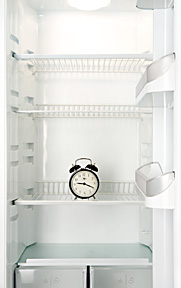
Diet Designs & A Healthy Fridge
Read through Diet Design's recent article in To Your Health magazine: Healthy Fridge.
You'll see some of our best tips for stocking your kitchen with nutritious snacks, treats, and condiments.

You'll see some of our best tips for stocking your kitchen with nutritious snacks, treats, and condiments.
Tuesday, June 7, 2011
USDA Guidelines, MyPlate, & Diet Designs
What do Diet Designs, the 2010 Dietary Guidelines, and the new "MyPlate" have in common? Each one helps individuals consume fewer calories while eating the correct portions of macronutrients. In my experience, clients need an easy to follow routine to help with weight loss and maintenance. Meal deliveries make portion control and healthy eating simple and easy. The new MyPlate targets that easy-to-follow guideline that people can understand.
The 2010 Dietary Guidelines were published at the end of January this year. By law, every five years The Department of Agriculture and the Department of Health and Human Services issue these evidence based reports. The Dietary Guidelines set the foundation for the Nutrition Facts panel on packaged foods. They are the standards behind My Pyramid, School Lunch, WIC, and other Federal nutrition education programs. Nutritionists and dieticians use them as part of their educational strategies every day. Personally, I’ve always advocated reading food labels and avoiding processed foods whenever possible.
Because many products advertise health claims such as “boosting immunity” and “improving brain development”, understanding the Nutrition Facts panel remains an essential part of shopping decisions and meal planning. As health conscious consumers, we need to look past the misleading advertising and review food labels. For example, Cocoa Krispies has claimed to “support your child’s immunity” because it contains Vitamins A, C, and E. How can they claim these health benefits from a cereal comprised nearly 40% of sugar? Don’t be tricked by some of these functional foods that claim disease prevention or health benefits. Instead, opt for nonfat or greek yogurt if you’re looking for possible immune benefits. The probiotics also aid with digestion and chronic intestinal inflammatory diseases.
Because many products advertise health claims such as “boosting immunity” and “improving brain development”, understanding the Nutrition Facts panel remains an essential part of shopping decisions and meal planning. As health conscious consumers, we need to look past the misleading advertising and review food labels. For example, Cocoa Krispies has claimed to “support your child’s immunity” because it contains Vitamins A, C, and E. How can they claim these health benefits from a cereal comprised nearly 40% of sugar? Don’t be tricked by some of these functional foods that claim disease prevention or health benefits. Instead, opt for nonfat or greek yogurt if you’re looking for possible immune benefits. The probiotics also aid with digestion and chronic intestinal inflammatory diseases.
Another exciting fact about food labels: reading them has been proven to help you lose weight! A study published in the Journal of Consumer Affairs states that “women were more likely to read food labels than men and also more successful in losing weight. Label users who did not exercise displayed a slightly greater likelihood of weight loss than those who exercised but did not read food labels” (Mandal, 2010). The data suggests that reviewing food labels helps keep us on the right track!
According to the USDA Press Release on January 31, 2011, the new 2010 Dietary Guidelines aim to “promote health, reduce the risk of chronic diseases, and reduce the prevalence of overweight and obesity through improved nutrition and physical activity.” Since two-thirds of adults are overweight or obese, the focus remains on reducing calories and increasing physical activity. The two overriding concepts of this report are to “maintain calorie balance over time to achieve and sustain a healthy weight and to focus on consuming nutrient-dense foods and beverages.” They also emphasize that nutrient needs should be met through the consumption of whole foods. Eating appropriate portions of nutrient dense foods is key. Downsize your portion size, make half your plate fruits and veggies, and replace high calorie food with nutrient dense food lower in calories.
Another significant quantity that many consumers overlook is their sodium intake. In other words, most people eat too much salt! The 2010 Dietary Guidelines stresses that most populations need to consume 2,300 mg or less (approximately 1 teaspoon) of sodium per day. They encourage 1,500 mg or less of sodium for high risk groups, including those with high blood pressure and older adults. By staying away from processed foods and preparing more home-cooked meals, you can keep your sodium consumption down. Many of my clients don’t realize the high levels of sodium contained in meals like pizza, soups, and other frozen foods. Compare food labels and choose the option that contains the lowest amount of sodium.
Besides sodium, a few other principles stand out to me. First, keep saturated fat at less than 10 percent of calories by replacing them with monounsaturated and polyunsaturated fatty acids. This means avoiding cream, butter, oils and eating healthy fats, such as nuts, avocados, and grapeseed oil. The guidelines also recommend avoiding all trans fats, partially hydrogenated oils, and added sugar. Also, consume at least half of all grains as whole grains. Because these grains still contain the bran layer and outer hull, they also contain other nutrients like selenium, potassium, and magnesium. These grains give you energy and help you concentrate. In addition, try to eat more nutrient, fiber-rich plant based foods. High fiber foods tend to make you feel full longer. Great choices include barley, brown rice, millet, wild rice, and whole wheat bread and pasta.
Other recommendations include increasing low-fat dairy products and choosing lean protein. Consume the often deficient nutrients, potassium, calcium and Vitamin D, through a varied diet of fruits, vegetables, whole grains, and milk products. The 2010 Guidelines state that eating 8 ounces of seafood per week helps get healthy fats, especially Omega-3 fatty acids, into your diet. You can achieve this by eating a 4 ounce portion of fish twice a week. Other reasons to eat more seafood, high fiber foods, and good fats will help lower your dietary cholesterol. Keep in mind that total cholesterol should be less than 200 mg/dL for a healthy heart.
All of these principles outlined in the 2010 Dietary Guidelines are important. What's interesting is that the new MyPlate is exactly what Diet Designs has suggested since the day we opened, nearly 20 years ago. Eating portions of whole foods, with a focus on fruits, vegetables, whole grains, and lean protein is the only way to provide your body with the nutrients it needs. A healthy serving of low-fat dairy with each meal, can't hurt :)
Keep these principles in mind the next time you go out to the market! Studies show that reviewing labels and understanding the Dietary Guidelines contribute to healthy weight loss.
Monday, May 23, 2011
Diet Design's Sweet Saturdays & Fred Segal
Take a look at Fred Segal's blog about our very successful event this past weekend:
In Health & Happiness,
The DD Team
Friday, May 20, 2011
Sweet Saturdays
Trying to slim down in time for Summer? Is your sweet tooth getting in the way of your progress?
Come check out "Sweet Saturdays" at Fred Segal this Saturday, May 21st at 12:00 p.m. to 4:00 p.m.
The Diet Design's team will be giving out amazing desserts as well as expert advice and brochures about our celebrity-tested weight loss plans.

Come check out "Sweet Saturdays" at Fred Segal this Saturday, May 21st at 12:00 p.m. to 4:00 p.m.
The Diet Design's team will be giving out amazing desserts as well as expert advice and brochures about our celebrity-tested weight loss plans.
Tuesday, May 10, 2011
Catching More Zzz's Adds Up to Greater Weight Loss
Studies show that weight gain and overeating may be caused by lack of sleep! Metabolic changes due to lack of proper rest will affect you throughout the day. People who sleep less have hormone imbalances that are likely to cause overeating and increased appetite. How can you get more sleep? Below are some great ways to get your best rest ever:
- Find your perfect sleep routine. Try to go to bed and wake up around the same time every day. Design your surroundings to be the ideal, peaceful space that you need to relax- try creating a dark, calming, and cool room. Use a sleep mask, a white noise machine, or spritz your linens with a light lavender spray.
- What you do throughout the day influences how well you will sleep at night! Spending some time outdoors can provide you with fresh air that will put you to sleep at night. Try taking an evening walk around the block and enjoy your natural surroundings.
- Keep a pad of paper and a pen by your bed- if you wake up during the night, write down your thoughts or ideas. They’ll be out of sight and out of mind, ready to reflect upon the next day.
- Get enough exercise. A morning exercise routine has been shown to jumpstart your day, perk you up, AND help you fall asleep at night. Are you a late-night gym junkie? Try taking a yoga or Pilates class to burn calories and relax, instead of over-stimulating your brain with heavy cardio during the evening hours.
- Take a relaxing bath with lavender or chamomile oils, which are known to promote sleep and calm your senses.
- Try drinking a glass of tea in the evening. One cup of green or chamomile tea will allow you to relax and unwind.
- Avoid alcohol and caffeine, both of which will promote restlessness.
- Take a melatonin supplement an hour before bedtime (approximately 1-3 mg). This neurohormone helps maintain the body’s circadian rhythms so you can catch those much needed zzz’s.
- Choose your evening snack wisely. Having a small protein or complex carb-rich snack will help you fall into your deepest sleep. Protein gives you a splash of tryptophan while complex carbs cause an insulin release, allowing tryptophan to reach and calm your brain. Just make sure to enjoy it no later than 3 hours before you hit the hay, preferably by 8 pm.
- Great choices include:
- Dairy Have a small evening treat of Greek yogurt or milk. Dairy contains tryptophan and calcium, which may reduce stress and “slow down your brain traffic.”
- Cherries Enjoy a dozen fresh or frozen cherries! They contain high levels of melatonin, a neurohormone that controls your body’s sleep and wake cycles.
- Almonds Have a dozen almonds as your evening snack. They are great sources of magnesium, which promotes sleep and relaxation. Almonds also provide your body with a small dose of protein to start your body’s rest-and-digest cycle.
- Banana Try snacking on half a banana. This fruit contains magnesium to promote sleep and potassium to relax those sore muscles. Bananas also contain tryptophan, a precursor of serotonin and melatonin, neurotransmitters that make you sleepy.
Subscribe to:
Posts (Atom)